27 Oct 2026
Tracing the Web of Regulatory Milestones Shaping Silver Alloy Standards

Regulatory frameworks for silver alloys have evolved through centuries of trade agreements, purity requirements, and industrial demands that shaped how manufacturers test and label these materials across global markets. Ancient civilizations established initial benchmarks for silver content in coins and artifacts, with Roman authorities enforcing minimum fineness levels that influenced later European systems, while medieval guilds in various regions introduced stamping practices to verify alloy compositions before items reached consumers.
Foundations in Early Trade and Guild Oversight
By the 1300s, European cities formalized hallmarking procedures that required silversmiths to submit pieces for assay testing, and records from that era indicate these steps reduced fraud in alloy mixtures containing copper or other base metals. Guild masters conducted assays using touchstones and fire methods, then applied marks that signaled compliance with local standards, which helped standardize practices across borders as trade expanded during the Renaissance.
Observers note that these early rules focused primarily on coinage and decorative items, yet they set precedents for distinguishing sterling silver at 92.5 percent purity from lower-grade alloys that might contain higher percentages of additives for durability or cost reasons.
Industrial Expansion and National Standards
The 19th century brought rapid changes as factories scaled production of silver-plated goods and solid alloy components for machinery and household items. In the United States, the National Bureau of Standards began publishing guidelines in the early 1900s that defined acceptable tolerances for silver alloys used in commercial applications, and these specifications helped manufacturers align with emerging consumer protection laws. Data from that period shows increased testing protocols for electrical contacts and photographic materials, where precise silver content affected performance and safety.
European nations followed similar paths, with Germany and France developing national assay offices that coordinated on cross-border shipments, whereas Australia introduced its own marking requirements tied to import duties during the same decades. Researchers have traced how these fragmented rules gradually converged around common purity thresholds, reducing disputes in international commerce.
Twentieth-Century Harmonization Efforts
After World War II, international bodies pushed for unified standards that addressed both precious metal content and alloy additives. The International Organization for Standardization released its first guidelines on silver alloy testing methods in the 1970s, and subsequent revisions incorporated advanced spectrometry techniques that replaced older fire assay methods in many laboratories. According to industry reports, these updates improved accuracy for alloys ranging from 80 percent to 99.9 percent silver, which supported sectors like electronics and medical devices where trace impurities could compromise results.
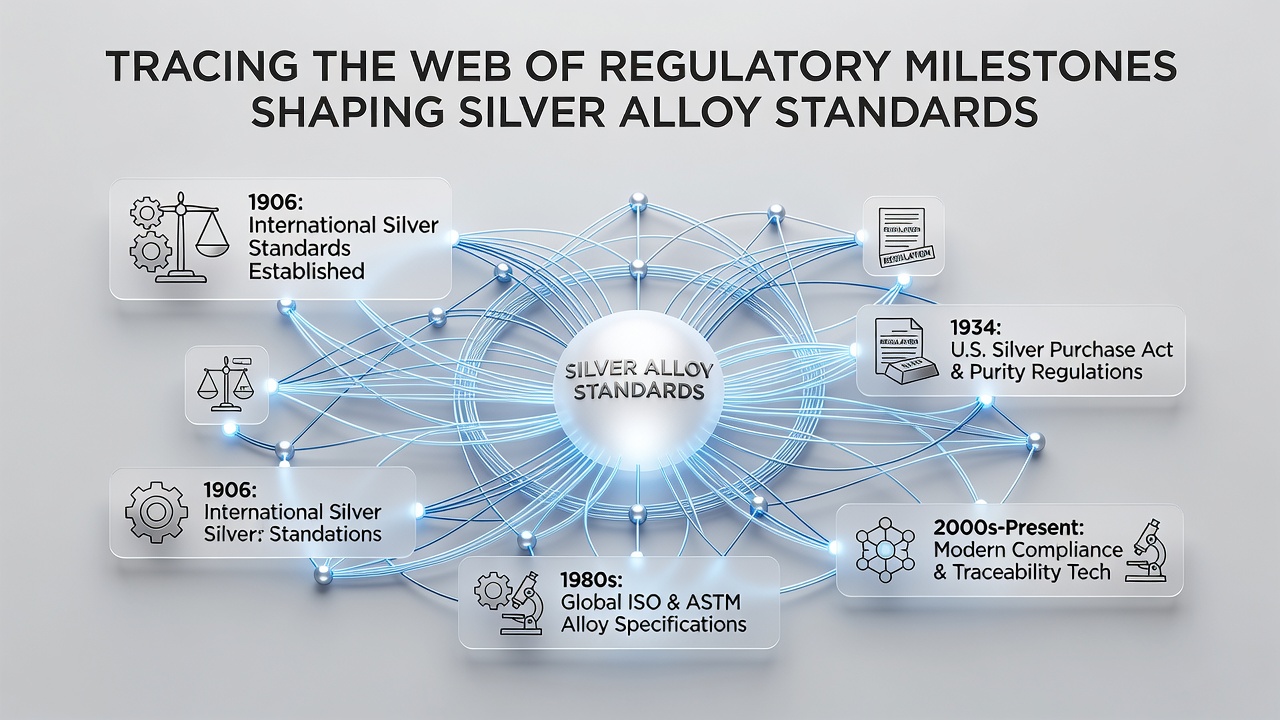
Meanwhile, the European Economic Community advanced directives in the 1980s that required member states to recognize each other's hallmarking systems, and this framework later expanded under the European Union to cover more alloy variants used in jewelry and industrial parts. Canadian authorities aligned their standards with these developments through bilateral agreements, while data from trade statistics reveals a measurable drop in non-compliant shipments after the new mutual recognition rules took effect.
Recent Developments and Global Alignment
Into the 21st century, regulators have focused on environmental and supply chain transparency alongside traditional purity rules. The United States updated its guidelines through the Federal Trade Commission to address marketing claims for silver alloys, and similar revisions appeared in Australian consumer protection codes that emphasize clear labeling of alloy percentages. What's interesting here is how digital tracking systems now allow real-time verification of assay certificates, which streamlines compliance for exporters dealing with multiple jurisdictions.
In October 2026, several international working groups plan to review updates to testing protocols for recycled silver alloys, building on existing ISO frameworks to incorporate new data on trace element detection. Those who've followed these processes observe that coordination between bodies like the Silver Institute and national metrology agencies continues to drive incremental refinements rather than wholesale overhauls.
Academic studies from research institutions in multiple regions have documented how these milestones reduced variability in alloy performance, particularly for applications requiring consistent conductivity or corrosion resistance. Yet gaps remain in enforcement for smaller markets, where local labs may lack equipment for the most current analytical methods.
Conclusion
The progression from guild-based stamping to modern spectroscopic verification illustrates a steady accumulation of regulatory layers that respond to technological advances and trade growth. Each milestone built on prior ones, creating the interconnected standards that govern silver alloy production and distribution today, and ongoing reviews ensure these systems adapt to emerging materials and verification tools.