10 Nov 2026
Decoding Trace Element Roles in Silver Alloy Performance Enhancements
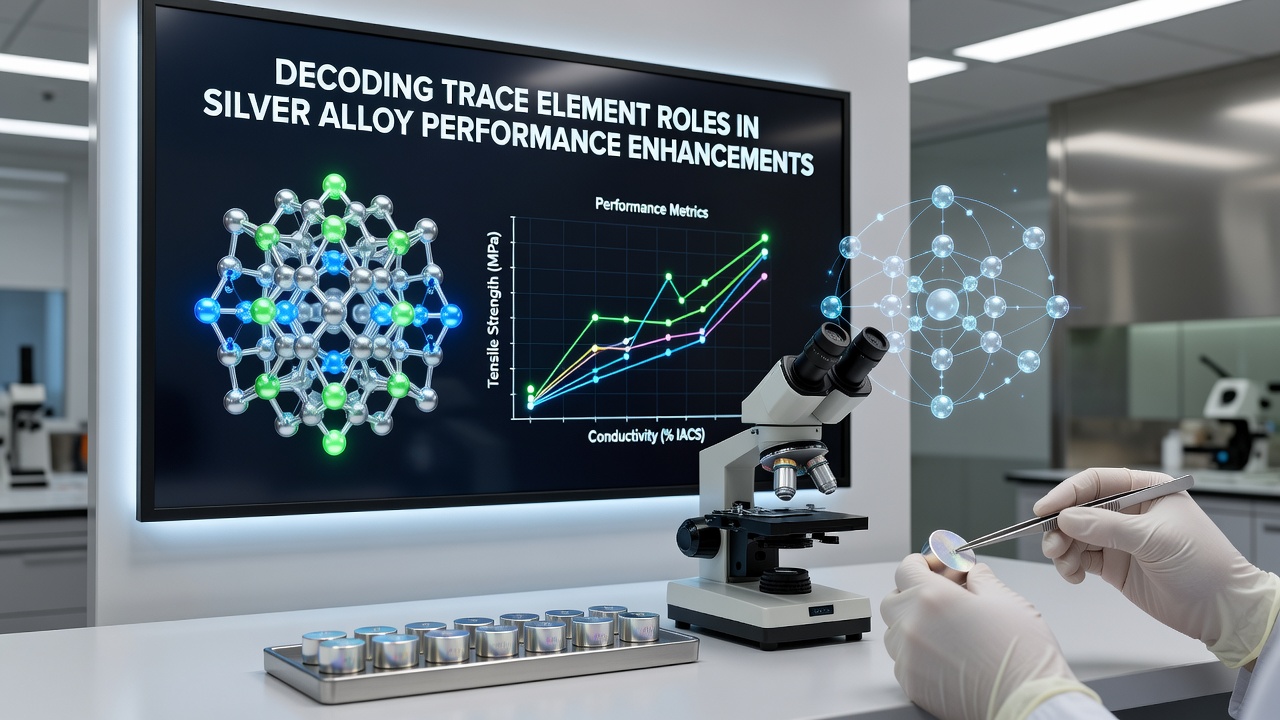
Trace elements in silver alloys influence mechanical strength, electrical conductivity, and corrosion resistance in ways that extend far beyond the primary silver content, and researchers continue to map these relationships through controlled experiments and industrial testing. Data from materials laboratories show that additions at parts-per-million levels can alter grain boundary behavior, reduce tarnish rates, and modify thermal expansion coefficients without shifting the alloy far from its nominal composition.
Primary Trace Elements and Their Documented Effects
Copper remains the most common intentional addition in sterling silver alloys, yet other elements such as germanium, zinc, and palladium appear in smaller quantities to address specific performance gaps. Studies conducted at government metrology institutes indicate that germanium concentrations between 0.5 and 1.5 percent can lower tarnish formation rates by forming a thin oxide layer that slows sulfur diffusion. Zinc, introduced at trace levels, serves as a deoxidizer during melting and helps maintain fluidity for casting operations, while palladium additions in teh 0.1 to 0.3 percent range increase resistance to stress corrosion cracking in chloride environments.
Researchers have observed that silicon and boron, present at even lower concentrations, refine grain size during solidification and thereby improve tensile strength and fatigue life. These effects become measurable in standardized bend and pull tests performed according to ASTM specifications, and the same tests reveal that exceeding certain thresholds produces brittleness rather than added toughness.
Performance Metrics in Electrical and Mechanical Applications
Electrical conductivity measurements compiled by standards organizations demonstrate that trace additions can either preserve or slightly reduce conductivity relative to pure silver, depending on the element and its distribution. Copper raises resistivity modestly but increases hardness enough to allow thinner conductor sections in some designs, offsetting the conductivity loss. Germanium-bearing alloys show stable contact resistance over thousands of insertion cycles in connector testing, a property valued in electronics manufacturing.
Mechanical performance data collected across multiple production batches reveal that controlled trace-element profiles reduce the incidence of cracking during forming operations. One production study tracked spring-back angles in stamped components and found consistent reductions when palladium levels stayed within a narrow window, while deviations outside that window reversed the benefit. Thermal cycling tests conducted by research groups in Canada and Australia further confirm that alloys containing balanced trace additions maintain dimensional stability across temperature swings encountered in aerospace and automotive environments.
Analytical Techniques and Quality Control Practices
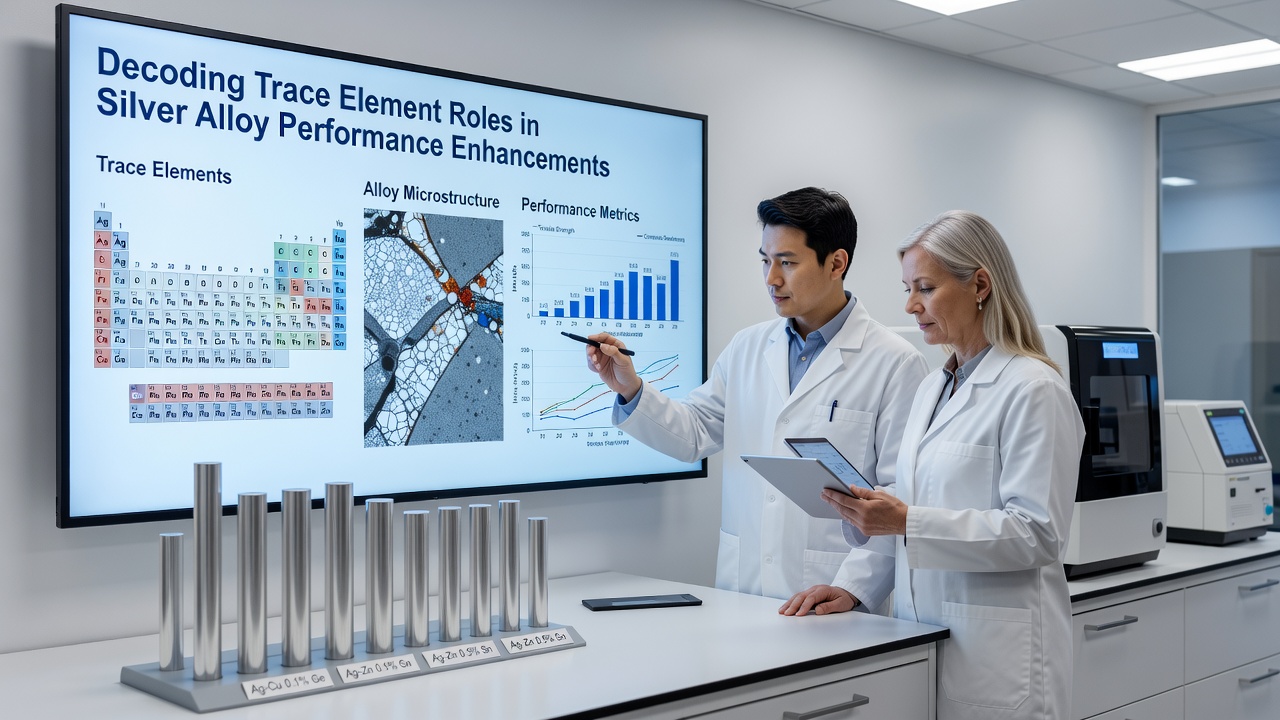
Modern characterization relies on inductively coupled plasma mass spectrometry and glow-discharge optical emission spectroscopy to quantify trace elements at the required precision. These methods allow producers to verify that incoming material lots fall within specification limits established by industry standards. X-ray fluorescence provides rapid screening on the shop floor, though it requires calibration against certified reference materials issued by national metrology bodies.
Process control charts maintained by alloy manufacturers document how small variations in trace content correlate with downstream rejection rates. When germanium levels drift below target, tarnish complaints rise in finished jewelry stock, and when silicon exceeds its upper limit, cracking appears during wire drawing. Such correlations appear in internal quality records and are corroborated by third-party audits conducted under ISO 9001 frameworks.
Regulatory and Standards Developments
Upcoming reviews scheduled for November 2026 at the International Organization for Standardization will examine whether current limits on certain trace elements require adjustment based on accumulated performance data from multiple sectors. European technical committees have already circulated draft amendments that propose tighter tolerances for palladium in medical device alloys, citing biocompatibility studies performed across several member states. In parallel, the National Institute of Standards and Technology continues to update reference materials that support traceability for laboratories testing silver alloy compositions.
Industry groups in Japan and South Korea have published joint research summaries showing that harmonized trace-element specifications improve cross-border supply chain consistency. These summaries reference round-robin testing programs in which multiple laboratories measured the same alloy batches and reported agreement within stated uncertainty budgets.
Conclusion
Trace element management in silver alloys rests on quantitative relationships established through repeated experimentation and standardized testing rather than isolated observations. Continued refinement of measurement techniques and alignment of international standards support consistent performance across electrical, mechanical, and decorative applications. As new data emerge from ongoing research programs, alloy specifications will evolve to reflect measured improvements in strength, conductivity, and environmental stability.